Boring Wins Titles: Training Players to Win with Patterns
A title won the boring way
Oliver Beadle won the national singles title in Bolton today. If you were watching for highlight-reel shots, you'd have called it boring. Monotonous, even.
That's exactly the point. The same patterns turned up again and again, point after point, game after game. Oliver's own patterns, and the patterns the match kept serving up. He recognised them, he executed them, and he did it more often than the player across the net.
That is how titles are won. Not with the shot of the day, but with the pattern you can trust at 4-4, 30-40.
Matches are won by patterns, not highlights
Most points in a match last fewer than five shots. Most of those start with the same handful of situations: a serve, a return, a neutral rally ball, a short ball, a ball under pressure.
If the situations repeat, the answers should too. A player without patterns has to invent a solution every point. A player with patterns already knows what comes next, so their mind is free to read the opponent and stay calm.
This is what I teach in every SYSTEM-9 book: tennis is not a series of random events. It is a small number of situations that keep coming back. Train the answers, and the match becomes familiar territory.
Three kinds of pattern every player needs
I split patterns into three groups. A winning player uses all three, often in the same point.
Personal patterns are built around the player's strengths. They are the plays you go to because they work for you: your best serve and first-ball combination, your favourite rally shot, the way you like to finish. They are your identity on court.
Opponent patterns are built around the player across the net. Every opponent has habits and holes: a backhand that floats under pressure, a return that always goes crosscourt, a player who hates coming forward. Once you've found them, you build plays that attack them.
Match patterns are the situations the game keeps handing you, whoever you play. The short ball that must be attacked. The deep ball that must be neutralised. The wide ball that must be defended back to safety. You don't choose these; you recognise them and respond.
Reading the opponent
Opponent patterns don't come from a coach's game plan alone. The player has to find them, live, in the first few games and keep checking them for the rest of the match.
I teach players to look for four things:
- The weaker side. Which wing breaks down first when it's put under pressure: height, pace or width?
- Their favourite play. What do they go to when the point matters? Expect it, and take it away.
- Their comfort zone. Do they like pace or hate it? Baseline or net? Long rallies or short ones? Then push them out of it.
- Their habits under pressure. Where does their serve go at 30-40? Where does the return go when they're rushed? Habits get stronger, not weaker, when the score is tight.
Then the player tests it. Two or three balls at the suspected weakness, and watch what comes back. If the hole is real, it becomes a pattern. If it isn't, move on and test the next one.
Putting all three together
The best players blend the three. A typical point might start with a personal pattern (the serve +1 they trust), be steered into an opponent pattern (everything to the floating backhand) and be finished by a match pattern (the short ball that comes back gets attacked).
The order of priority I give players is simple:
- Never miss what the match is demanding. A short ball must be attacked; a wide ball must be defended. Get these wrong and nothing else matters.
- Play your strengths into their weaknesses. Where a personal pattern and an opponent pattern overlap, that's your winning play. Use it until they solve it.
- When they adjust, adjust back. If they cover the weakness, it opens space somewhere else. Find it and build the next pattern.
How I train patterns: the SYSTEM-9 way
Patterns are not drilled once and filed away. They are built in stages, the same way I build every part of a player's game.
- Profile the player. Before anything else, we find out who they are. Where do they win points? Where do they lose them? A heatmap and servemap tell us more than opinion ever will.
- Choose two or three personal patterns. Not ten. A few patterns the player owns completely beat a dozen they half know.
- Feed it closed. The coach feeds the pattern so the player can groove the shapes, targets and footwork with no pressure.
- Open it up. Live ball, with the pattern starting from a serve or a rally. Now the player has to find the moment to use it.
- Add the match patterns. Short ball, deep ball, wide ball. The player learns to recognise the situation and respond with the answer we've trained.
- Train the eyes. In practice sets, the coach or partner plays with a hidden weakness or a favourite play. The player has to spot it within a few games, say it out loud at the change of ends, and build a pattern to attack it.
- Score it. Points, games and pressure scoring systems. A pattern isn't real until it holds up when the score matters.
- Take it into matches and review. After every match: which of the three kinds of pattern turned up, which ones worked, what the player found in the opponent, and which patterns disappeared under pressure. Then back to the court.
The cycle never really ends. As the player grows, the patterns get sharper, quicker and harder to read.
Why boring is a weapon
Players get bored of their own patterns long before their opponents work them out. That's the trap. They change something that's working because it feels repetitive, and hand the momentum back.
Repetition under pressure is a mental skill, not just a technical one. It takes discipline to play the same pattern at 5-5 that you played at 1-0. It takes trust to keep going back to it after it fails once.
I teach players to judge a pattern by one question: is it winning me more points than it loses? If the answer is yes, keep playing it. Let the opponent be the one who has to find something new.
Today in Bolton, that's what a national title looked like. Not exciting. Just right, again and again.
What to take onto court this week
Coaches:
- Profile each player before you give them patterns.
- Limit them to two or three personal patterns they can own.
- Train players to read opponents, not just hit balls: give them hidden weaknesses to find in practice sets.
- Always finish a pattern session with scoring and pressure.
- Review patterns after every match, not just results.
Players:
- Know your two best patterns and go to them when it matters.
- Use the first few games to find the opponent's weaker side, favourite play and habits under pressure.
- Learn to recognise short, deep and wide balls, and have an answer ready for each.
- Where your strength meets their weakness, that's your winning play.
- Don't abandon a pattern because it feels boring. Abandon it only if it stops winning points.
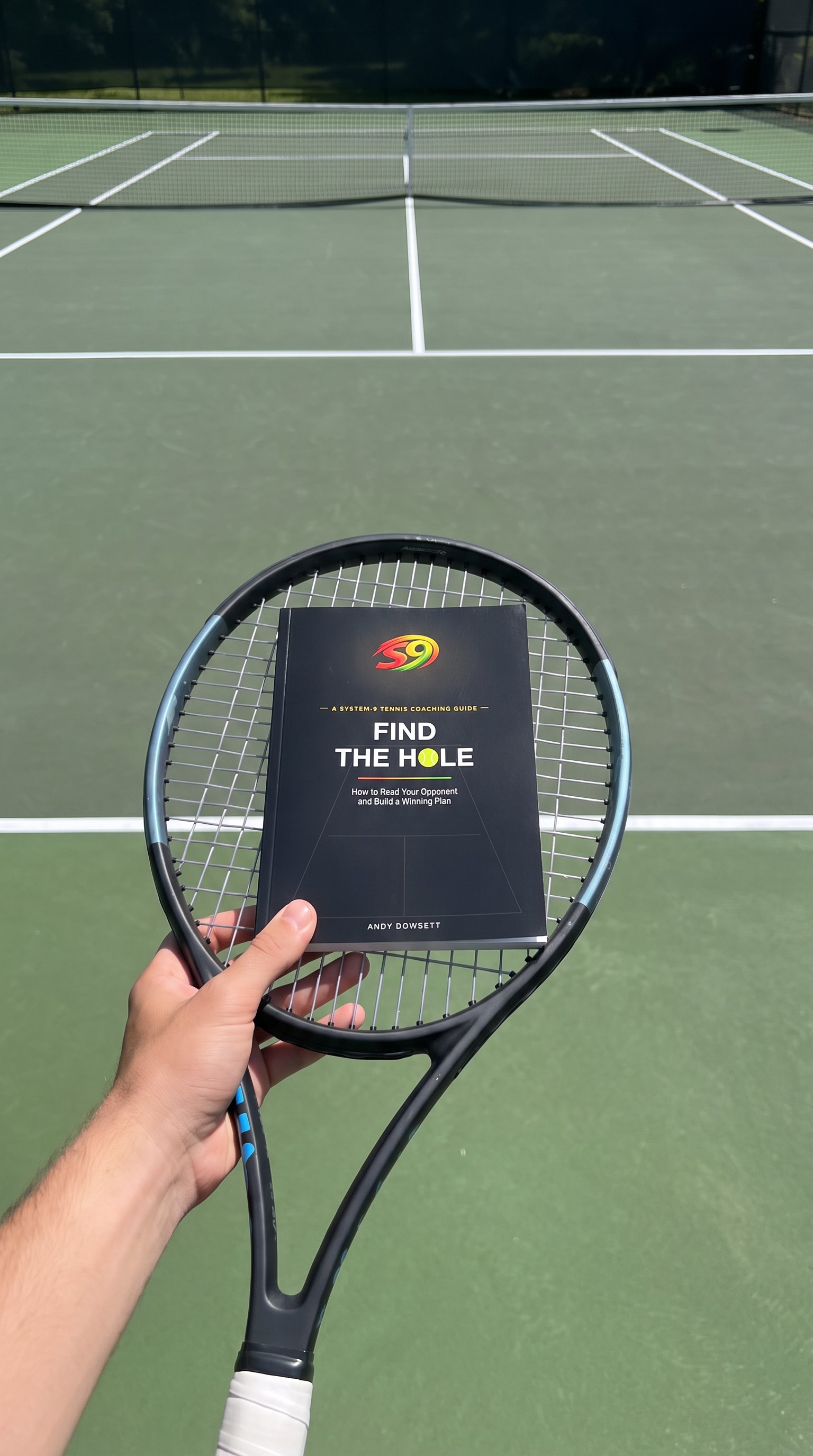
If you want the full pattern framework, it's laid out stage by stage in my books, including Singles Tactics, Patterns of Play for Individual Lessons and Find the Hole. Coaches can go deeper through the SYSTEM-9 courses at system9tennis.com.